

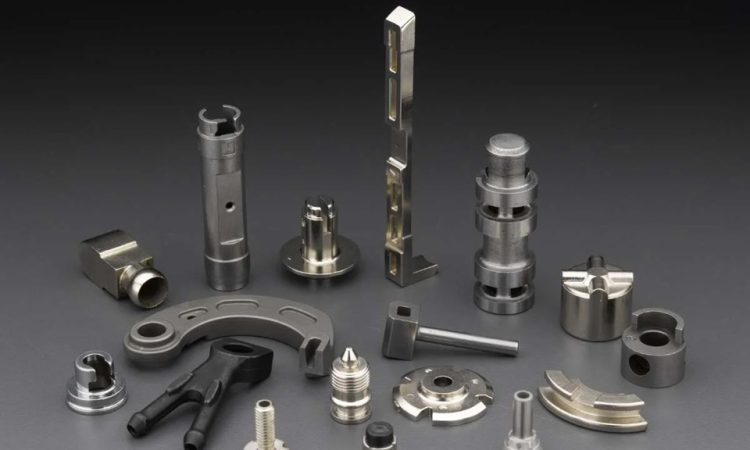

The search for a dependable MIM manufacturer begins not with promises, but with evidence of capability measured in microns, tensile strength and production consistency. Metal injection moulding has evolved from an experimental process in the 1970s into a cornerstone technology for industries demanding high-density metal components with complex geometries. Today’s leading facilities operate with the understanding that reliability stems from rigorous process control, material expertise and the accumulated knowledge of thousands of production runs.
The Density Imperative
Density defines the fundamental value proposition of metal injection moulding. Unlike conventional powder metallurgy methods that achieve 85 to 90 per cent of theoretical density, sintered MIM components routinely reach 95 to 99 per cent density. This distinction translates directly into mechanical properties. Higher density means greater strength, improved hardness and enhanced resistance to fatigue and corrosion.
A MIM manufacturer achieves these density levels through precise control of the sintering atmosphere and temperature profile. As industry documentation explains, “the brown part undergoes a sintering process at a specific temperature/atmosphere profile, until it hits the targeted density.” The parameters vary by material. Stainless steel requires different conditions than titanium, which differs again from tungsten heavy alloys. Mastering these variations separates competent facilities from truly capable ones.
Material Systems and Their Applications
The range of materials processed by leading facilities reveals the versatility of metal injection moulding:
• Stainless steel grades
316L for corrosion resistance in medical environments, 17-4 PH for higher strength in aerospace applications, 420 for hardness in wear components
• Low-alloy steels
Fe-2Ni and Fe-8Ni for controlled thermal expansion in electronics and optical systems
• Soft magnetic alloys
Iron-nickel compositions for sensors and electromagnetic applications
• Titanium alloys
Ti-6Al-4V for biomedical implants combining strength with biocompatibility
• Tungsten-based materials
Tungsten heavy alloys for radiation shielding, tungsten-copper for thermal management
• Superalloys
Inconel for extreme temperature stability in turbine components
This materials palette allows a skilled MIM manufacturer to address applications across medical devices, automotive systems, consumer electronics, industrial equipment and defence technologies.
Process Control Architecture
Reliability in metal injection moulding derives from systematic process control implemented across every production stage. Metal powder characteristics matter profoundly. Particle size distribution, morphology and chemistry must fall within narrow specifications.
Feedstock preparation demands equally rigorous oversight:
- Precise weighing of powder and binder components
- Controlled mixing temperatures and durations
- Verification of feedstock rheology before production release
- Batch traceability linking finished parts to specific material lots
Injection moulding parameters receive continuous monitoring. Barrel temperature, injection pressure, holding time and cooling rate all influence part quality. Modern facilities employ statistical process control, tracking these variables to detect drift before it produces out-of-specification components. As one Singapore-based operation notes, maintaining strict oversight “ensures that the parts produced are similar,” reducing variation that undermines reliability.
Debinding and Sintering Criticality
The transformation from green part to finished component occurs during debinding and sintering. Debinding removes binder gradually, preventing defects like cracking or bloating. Facilities employ thermal debinding, solvent debinding or catalytic methods depending on binder chemistry and part geometry.
Sintering represents the culmination of all preceding steps. Temperature uniformity within furnace chambers must remain within tight bands. Atmosphere composition requires precise control. A leading MIM manufacturer invests substantially in furnace technology and process development, understanding that sintering expertise distinguishes adequate from exceptional results.
Industry professionals confirm that “net shape production minimises or eliminates machining,” highlighting how proper sintering delivers components to final dimensions.
Quality Systems and Validation
Certification frameworks like ISO 9001 and ISO 13485 provide necessary structure, but genuine quality transcends checklist compliance. Leading facilities implement validation protocols demonstrating process capability across representative production volumes.
Inspection methodologies employ both traditional and advanced techniques:
- Dimensional verification using coordinate measuring machines
- Density measurement through Archimedes principle or metallographic analysis
- Mechanical testing including tensile strength, hardness and impact resistance
- Non-destructive evaluation for critical applications
- Material composition verification through spectroscopy
For regulated industries like medical devices, a reliable MIM manufacturer maintains full traceability from raw material certificates through final inspection records.
The Singapore Manufacturing Advantage
Singapore’s emergence as a regional hub for metal injection moulding reflects strategic investment in advanced manufacturing capabilities. The concentration of technical expertise, quality infrastructure and regulatory sophistication creates an environment where precision manufacturing thrives. Facilities in the region serve global customers across medical, automotive and semiconductor sectors.
The scale of Asian MIM production has grown substantially, with industry observers noting that “the MIM industry in Asia is the world’s largest, whether considered in terms of number of parts produced, sales turnover or production volume.”
Selecting for Reliability
Choosing a MIM manufacturer requires evaluating evidence of sustained performance. Production history, customer references and technical capabilities matter more than promotional materials. The best partnerships form when manufacturers demonstrate not just current competence, but commitment to ongoing improvement in process understanding, material development and quality systems. For industries where component reliability determines system success, working with a proven MIM manufacturer represents not an expense, but an investment in dependable outcomes.