5 Rabbit and Deer Checks Before You Buy Fruit Trees with Nursery Specialist Guidance

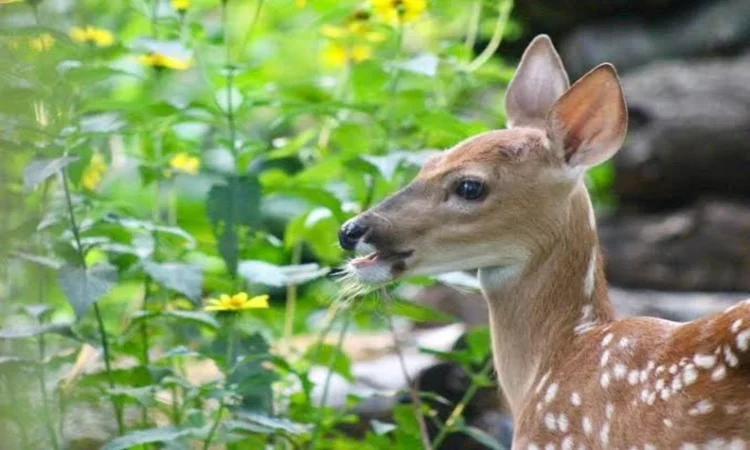
A young apple tree can lose the bark around its stem before it has produced a single fruit. The damage is often discovered on an ordinary morning, after rabbits or deer have visited unnoticed. A garden fence that looks reassuring from the kitchen may have a gap beneath a gate, while a spiral wrapped around the trunk leaves every low branch exposed. Protection works best when it responds to the animal and the tree, rather than simply making the planting look secure.
For a British garden beside fields, woodland or connected suburban gardens, the useful questions begin before planting day. Which animals are present, how do they enter, and which parts of the proposed tree will remain within reach? Five checks turn those questions into a workable plan, with enough room to water, prune and inspect the tree as it grows.
Fruit-Trees, the specialist fruit nursery, highlights damage to young bark and tender growth in its published growing advice, and advises gardeners to provide protection rather than rely on animals staying away. It notes the danger of bark stripping during winter and browsing of fresh shoots in summer. The practical implication is that a guard deserves attention throughout the year, even when the first flush of leaves looks untouched. Protection should cover the vulnerable parts of the particular tree, with its condition checked as branches and stems develop.
Begin with evidence from the garden itself. A short inspection before ordering is more useful than choosing the tallest guard available without understanding the access route or the kind of damage involved.
Buy Fruit Trees After Identifying What Browses in the Garden
The first check concerns the animal. Look for several clues together: droppings, tracks in damp soil, the height of damaged shoots and marks on bark. Rabbits commonly graze close to the ground and leave small, rounded droppings. Deer reach higher and may leave torn ends where they have pulled at shoots. These signs guide an initial assessment, but one damaged twig alone is poor evidence. A mower, strimmer or rubbing tie can also injure a stem.
Compare damage across nearby plants before drawing a conclusion. A line of newly eaten shoots beside a woodland boundary suggests a different problem from bark gnawed at ground level inside a dense bed. Ask neighbours what they have actually seen, rather than whether deer are thought to live somewhere nearby. Where uncertainty remains, dated photographs of fresh damage and footprints give a garden adviser something useful to assess. Avoid diagnosing the cause solely from an old scar.
Identify the vulnerable part of the intended tree as well. A small bush tree has low branches that may lie within browsing reach even when its main stem is protected. A taller clear stem changes that arrangement, but it does not make the bark immune to damage. Nor should mature height be confused with the height of the tree delivered. A variety destined to become substantial still passes through a vulnerable young stage.
Imagine two trees at opposite ends of the same plot. One loses the tips of low branches; the other has a scraped patch on its trunk. It would be reasonable to investigate separate causes before fitting identical equipment. The result of this first check should be a brief description of the likely animal, the evidence supporting that view and the parts needing protection. That description will determine what to measure next.
Trace the Routes Through the Boundary
The second check follows the animal’s possible route into the planting area. Walk the whole boundary slowly, including places hidden by a shed, hedge or compost bay. Look under gates, beside posts and where fencing meets a wall. A strong barrier along most of a boundary offers little reassurance if a single opening remains at the end. Ground levels matter too: a bank or pile of stored materials can change the effective height of a fence. Rabbits and deer require different assessments. Rabbit exclusion needs attention at ground level, where gaps and digging are relevant. Deer barriers need suitable height, strength and continuity for the species present; a low decorative fence is not equivalent to deer fencing. Ask an experienced supplier to specify a system for the actual site rather than applying one universal dimension. A small deer species and a larger one do not present identical challenges.
Think about daily use before deciding to enclose an area. A gate that must be opened for every watering trip needs a dependable latch and enough clearance for equipment. If a family regularly carries bicycles through the proposed enclosure, that movement belongs in the design. For example, putting three trees inside a narrow fenced strip may look economical until a wheelbarrow cannot turn without a gate being propped open. Sketch the route a person will take as carefully as the route an animal might take.
Existing fences should be assessed as structures, not just outlines on a plan. Loose posts, torn mesh and vegetation concealing the base need attention before young trees arrive. Where a whole boundary is impractical to secure, an individual enclosure may be the more manageable option. Record that decision explicitly. It avoids the common assumption that another person’s hedge or a neighbour’s closed gate will provide dependable protection for the new planting.
Match the Barrier to the Tree and the Animal
The third check is the protection itself. A trunk guard, a supported mesh cage and a fenced planting area perform different jobs. A spiral can protect accessible bark from smaller animals, but it is not a dependable barrier against deer and does not enclose the crown. An individual cage provides more separation from browsing mouths, provided its height, strength and width suit the tree and the animal. Neither should be chosen by appearance alone.
Measure the spread of the lowest branches and allow for their growth. If shoots already touch the mesh when the cage is fitted, the arrangement has little useful margin. Leaves protruding through openings remain available to browsers outside. For an espalier or other trained tree, protection may need to follow the wider framework rather than circle the trunk. The intended fruiting shape therefore belongs in the discussion with whoever supplies the guard or fencing.
A cage must be stable without forcing the tree to carry it. Its supports and the tree’s own stake have separate purposes, even if the layout brings them close together.
Keep sharp edges and fixings away from bark, and make any opening for maintenance straightforward to close again. Choose a design that lets a person reach the base to weed and water. Protection that makes ordinary care awkward is likely to be moved, left open or neglected.
Compare the complete arrangements for the number of trees proposed. Two well-built individual cages might be easier to maintain than fencing a large garden, while a compact group of trees may justify a shared enclosure. Include inspection and eventual adjustment in the comparison, not only the initial materials. There is no advantage in fitting an elaborate system that cannot be accessed safely. The right choice is the one that protects the vulnerable growth and remains practical through the establishment years.
Find the Weak Points Before Planting Day
The fourth check examines the assembled protection as an animal would encounter it. Start at the base and work upwards. Is there an opening where the ground falls away? Does a guard lift when pushed gently? Are low shoots sticking outside the protected area? This is a check of the installed arrangement rather than a repeat of the shopping decision. Even appropriate equipment fails when a gap, loose fixing or poor fit defeats its purpose. Place the tree and its protection in relation to one another before finalising the planting position. A narrow strip between a path and fence may have enough space for a trunk but insufficient room for a cage and maintenance access. Moving the planting position a little at this stage is usually easier than dismantling everything later. Avoid squeezing the enclosure until branches are bent against it simply to keep a path at its previous width.
Ground vegetation can hide changes that matter. A lifted section of mesh or a damaged lower edge is harder to spot behind long grass. Keep the immediate inspection area visible without scraping soil away from roots or bringing a strimmer against the stem. Mulch, where used, should remain clear of the trunk rather than being packed inside a guard. A tidy-looking pile against the bark is not a substitute for careful fitting.
After installation, test the routine that will be used most often. Carry a watering can in, reach the root area, check the tie and close the opening again. If two people are needed to replace an awkward panel every time, simplify the design before that inconvenience becomes habitual. Photograph the completed arrangement so a later comparison reveals whether posts have leaned or openings have widened. The purpose is to catch a preventable weakness while the tree is still undamaged.
Make Inspection Part of the Growing Routine
The fifth check continues after planting. A guard is a changing part of the garden because the stem thickens, branches lengthen and fixings weather. Include it in normal visits to water or weed, with a closer look after strong winds or obvious animal activity. Search for fresh marks, loose supports and points where the tree rubs against the barrier. A brief regular inspection is easier than trying to remember when a badly worn tie first became tight.
Seasonal changes alter what needs attention. New shoots extend beyond their earlier outline during growth, while bare winter branches make damage and contact points easier to see. Bark protection remains relevant when leaves have fallen. Adjust the arrangement to the tree’s actual development rather than removing it because a fixed anniversary has arrived. Conversely, do not leave a redundant guard in place indefinitely if it starts restricting growth or breaking into fragments.
If damage occurs, improve exclusion promptly and assess the injury before attempting a repair. Photograph the affected area, including the extent around the stem, and seek advice where bark loss is substantial. Ring barking means damage encircling the trunk; it is much more serious than a small isolated mark. Avoid assuming that new leaves immediately prove the injury harmless. Keep monitoring the tree, and do not cut away sound tissue simply to make a wound look neat.
Give anyone who looks after the garden a simple explanation of the protection. They need to know which panel opens, how it closes and what a new bite mark looks like. For a shared plot, record who will check it during absences. These arrangements need not become an elaborate diary. A few dated observations are enough to show whether damage has stopped and whether the current barrier is still serving the tree as its shape develops.
Turn the Five Checks into a Planting Decision
The findings should influence both the purchase and the planting layout. If the animal is uncertain, gather better evidence before paying for a specialised barrier. If access is clear but the boundary cannot be secured, assess individual protection. If the only possible enclosure leaves no room for future branches, reconsider the tree’s form or the position. These are useful reasons to adjust a plan; they are not signs that fruit growing is impossible.
A household planning one apple tree beside an open field might, for example, choose a position with room for a supported cage and easy access from the path. Another household with a sound enclosed garden and evidence only of rabbits might concentrate on ground-level openings and vulnerable stems. These are hypothetical arrangements, not guarantees for every site. Their value is that each connects observed risk with a practical response instead of treating every garden as the same.
Keep the order of work sensible. Specify the tree and its expected dimensions, decide how the vulnerable growth will be protected, prepare the position and have the equipment ready for arrival. A temporary period with an unprotected tree is an avoidable weakness if animal activity is already known.
Where the right materials cannot be obtained in time, discuss delivery timing with the supplier rather than relying on a loose piece of netting as an improvised permanent solution.
The final decision should leave enough space and time for care as well as protection. A smaller initial planting that can be inspected and maintained is often more workable than a larger one surrounded by inadequate barriers. Once the five checks are answered, the next job is concrete: measure the chosen position, obtain the specified protection and establish a routine for keeping it effective. The tree can then grow within an arrangement designed for its surroundings.